I Know Writers Who Use Subtext, And They're All Cowards
A Review Of Seed Of The Sacred Fig (2024)
October 21, 2025
“If they arrest us, well, there’s nothing you can do.”
Mohammad Rasoulof, Vanity Fair, 2024
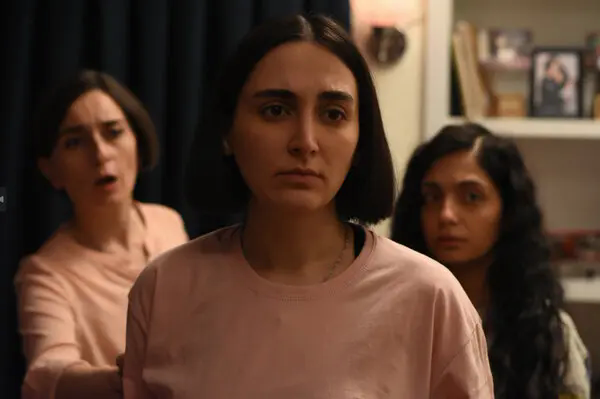
I saw The Seed Of The Sacred Fig (2024) on February 2nd, 2025, and I’m still thinking about it. If you’re looking for a review, that’s as glowing as it gets from me.
The movie is the latest by Iranian filmmaker, anti-regime activist, and current political exile Mohammad Rasoulof. Rasoulof has been making various anti-regime films since 2002, which have always skirted on the edge of legality within Iran’s heavily-censored media environment, and he’s even been arrested and jailed a few times for agitating against the regime, in film and otherwise.
Some people, when faced with this kind of risk to their lives and livelihood, would back off. Rasoulof, reflecting on his persecution while serving his latest stint in prison, seemed to take it as a challenge.
“That whole metaphor-and-allegory stuff is the aesthetics of totalitarianism. It has been a subtle form of suppression, of dissuading artists from expressing themselves, their true intentions. This aesthetics has led to the political castration of cinema. I am done with that path. I want to create realistic images, to express myself in my art.”
Mohammad Rasoulof, The New York Times, 2024
The Seed Of The Sacred Fig is set during the 2022 Woman, Life, Freedom protests in Iran, a wave of civil unrest sparked by the killing of Mahsa Amini, who was severely beaten by Iran’s morality police for “improperly” wearing her hijab. The protests quickly broadened into an expression of general anger against the Iranian theocracy, which responded in turn with swift brutality—over five hundred protesters are said to have been killed by police.
The movie isn’t a documentary, though. It’s a work of historical fiction (albeit about history which was less than a year old when they were filming). The heart of the story is the growing internal tension within a single family in Tehran. The father is a prominent and devout member of the Iranian legal system, about to be accepted onto the Revolutionary Court. The two daughters are increasingly politically aware and growing more radical, following the protests closely on social media. The mother is caught in the middle, trying in vain to hold her family together.
One of the first things that happens in the movie is the father making the slow realization that his job isn’t to independently determine the facts and deliver justice—it’s to sign death warrants for protesters who haven’t been conclusively proven to have done anything illegal, let alone anything immoral. In a less interesting movie, this would be the start of a slow radicalization against the regime as he learns the truth of what it really means to have a part of your government called the morality police.
Instead, the father seems to have the opposite reaction—the crisis of faith not met with reflection, but deflection. The emptiness and doubt in his heart needs to be filled by firmness and conviction at home, to prove to himself that he’s still in control over his own life.
Of course, this increases tensions with his daughters, and the paranoia that comes from the realization that they suddenly don’t trust each other is the main narrative driver of the film. The father really starts spiraling when the handgun he was issued for his own protection goes missing, and he believes a member of his family took it, leading to interrogations and accusations that eventually culminate in… well, I won’t spoil the whole thing for you.
You can really feel the production in this movie, if that makes sense. The film can feel a little claustrophobic at times. Not only do the characters only feel safe to truly express themselves inside their own apartment, the crew could only ever film something like this indoors—and in secret. Filming an actress in private without a hijab is illegal and so must be done in secret, but beyond even that, filming someone with these quietly radical sentiments wouldn’t be allowed. The actors are playing characters who are hiding anti-regime sentiments, while being human beings who need to hide anti-regime sentiments.
There are brief sections set outside and in public, but since the production couldn’t draw any attention to themselves, they needed to look like they were filming something entirely proper and legal. The characters, in turn, are trying to look innocent in public while they subtly ask around for information about a friend of the girls who went missing after a protest.
The acting feels authentic because it’s true to what the actors were experiencing as they made the film, if for different reasons. Everyone in the film feels like they know things could all fall apart at any moment.
Eventually, of course, it did.
Rasoulof was informed that he had been charged for his previous defiance against the regime and sentenced to be jailed for eight years—and likely more, once they learned about The Seed Of The Sacred Fig. As he waited for his appeal to be processed, he spent as much energy as he could on the film, waiting for his time to run out. When his lawyer informed him that the appeal had failed and his sentence was to be started immediately, Rasoulof had a choice to make.
But the movie wasn’t done, so the choice was clear. Not easy, just obvious.
Rasoulof fled Tehran on foot, following a secret path, aiming to claim asylum in Germany. It took him 28 days of travel by trail and truck and plane until he arrived safely in Hamburg. The first place he went was to meet his film’s editor. After all, there was only six days until The Seed Of The Sacred Fig would premiere at Cannes—there was no time to lose.
Of course, the movie is flawed. The last act in particular feels like it drags, and some of the commentary is aggressively unsubtle.
But somehow, all of that feels rather beside the point.
❦
There’s one more trick the movie pulls that really stuck with me.
The movie is set during mass anti-government protests, and the violent government crackdown plays a key role in the ratcheting up of the tension. Obviously, these protests need to be seen on screen. Also obvious: the filmmakers can’t film it the traditional way, either by going into the real crowds and filming with their professional camera equipment or by recreating it using extras.
But these were protests in the 2020s, which meant they were extensively documented—on vertical mobile phone cameras by everyday people from their apartment windows, or by passing cars.
Anytime in the movie when it would make sense to show the protests—the mother is driving through a crowd, the girls are doomscrolling on their phones—we cut to real footage filmed during the protests by real people.
This has a fascinating effect*.* On one hand, there’s a level of emotional distance this creates from the events shown. When the rest of the film is shot so intimately and delicately, cutting to shaky, blurry footage means we only get a passing, cursory knowledge of the people in this video. It’s on the screen for only seconds before we swipe to the next one.
It really puts us in the perspective of the girls, more than anyone. They never actually go to a protest themselves, they just watch it along the sidelines, helplessly captivated and deeply furious at the injustice in their society, but never engaging in the real danger themselves.
I’m sure many of us have had that feeling too. The discombobulating effect of social media is to place videos of tragedy and chaos and death in between texts from our friends and reviews of local pizza places and cat videos. There’s a form of surrealness to it that separates us—or at least me—from these events emotionally. There’s a form of distance and.. bluntness (?) that makes it difficult to process the scale of the injustice you witness. By using only thisese third-party video footage shot from far away, the film captures this emotional distance very well.
On the other hand, holy shit, that’s a REAL video of someone ACTUALLY getting beat up by the cops.
When you watch a movie—any fictional movie, ever—you always know in the back of your head that these are actors. This is a fictional scenario. No one on screen is in any real danger of getting actually hurt in a way that doesn’t end when the camera stops. You can feel safe in that specific way, because there’s a barrier between the events of the film and reality.
That barrier is shattered by this choice. You’re reminded, frequently, that the events shown in this film really did happen. Hundreds of people died, and likely many thousands more were injured, for trying to exercise their basic human rights to dignity. The story may be fictional, but this struggle is very real, and it isn’t over.
How can a single filmmaking choice be simultaneously way more and way less intimate than any movie I’ve seen in years?
I’m still thinking about it today. What a fantastic film.
❦
Further reading:
- https://www.vanityfair.com/hollywood/story/how-to-make-a-movie-in-iran-and-not-get-caught-inside-the-seed-of-the-sacred-fig
- https://www.nytimes.com/2024/11/22/magazine/mohammad-rasoulof-iran-sacred-fig.html
- https://www.theguardian.com/film/article/2024/may/17/exhausting-and-extremely-dangerous-mohammad-rasoulof-on-his-hazardous-escape-from-eight-year-sentence
Recommended posts
Get new posts delivered to your inbox via Substack.
Prefer RSS? Subscribe via RSS feed.