Too Many Cooks And They All Hate Each Other
The Real Reason The Eglinton Crosstown Took So Long
March 2, 2026
Many people think the Eglinton LRT's story begins with the official groundbreaking in 2011. But this story really begins all the way in 1985, the first time that the City of Toronto began seriously considering a plan to build some sort of transit line on Eglinton Ave., a major street running east-west in the suburbs north of Toronto's downtown core.
Debate over whether this line should be a busway or a subway only ended in 1994 when everyone finally agreed on how to fund this brand-new subway line. Unfortunately, in 1995 there was a change in provincial government, and the newly-elected Mike Harris abruptly cancelled the project—after they had already started construction.
In 2007, Toronto Mayor David Miller proposed Transit City, an extremely ambitious roadmap to reshape public transportation in Toronto, which included the revival of the Eglinton subway as a light rail transit (LRT) initiative.
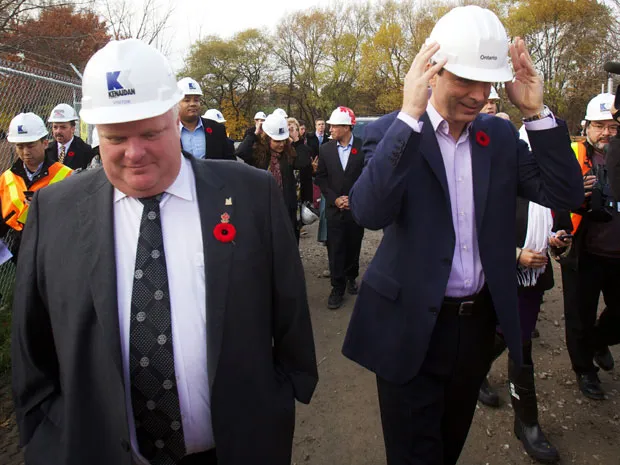
So, of course, the next mayor—the notorious Rob Ford—immediately cancelled all of Transit City on his first day in office in 2010. Instead, he proposed bringing back the old Eglinton subway idea from the 90s, as part of his campaign to “end the war on cars”. It's this version of the project that finally broke ground in 2011, with an expected opening date of 2020.
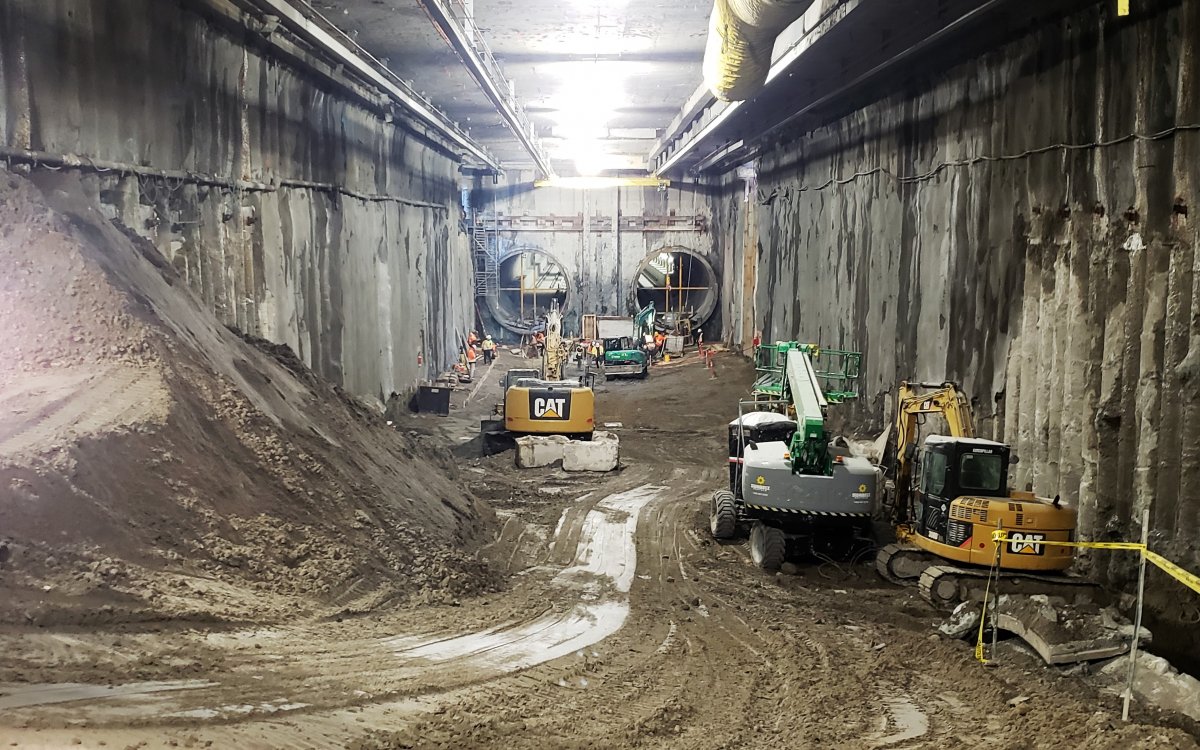
But don't worry, the drama isn't over yet! In 2012, City Council voted to undo the changes that Mayor Ford had made to the plan, which then reverted back to Miller's LRT idea—even after construction had already begun.
If you're thinking that these constant changes in direction probably damaged the Eglinton Line's momentum, you would be right! Unfortunately, shifting requirements and indecisive leadership wouldn't stop once the political jockeying ended.
❦
Let’s introduce the three main characters of this story.
First is the Toronto Transit Commission (TTC). The TTC is old. It was technically founded in 1921, but their history really goes back further, since it was created as an amalgamation of a few different Toronto transit agencies. It can trace its lineage all the way back to when “public transit” meant stagecoaches running down dirt roads. It’s wholly run by the Toronto municipal government, and by 2007, was responsible for the four subway lines, as well as all buses and streetcars, within Toronto city boundaries—all of which they had planned and designed from scratch.
Next up is Metrolinx, a much younger agency created by the Ontario government in 2006 to manage transit across the entire Greater Toronto-Hamilton Area (GTHA). Given this area’s increasing importance to the province—and especially considering how many people who live in one municipality work in another—managing their transit as one connected network could enable planning across jurisdictions and create a better, more comprehensive system. The Eglinton Crosstown was one of Metrolinx's first new projects they would manage, so some growing pains were inevitable.
Finally, there's Crosslinx, the consortium of engineering firms that Metrolinx hired to not just build the line, but to design and even fund construction for the project in exchange for more control and financial interest in the end project. This financial structure is called a Public-Private Partnership (P3).
In theory, the point of a P3 is to shift the risk for cost overruns away from the government and onto the private corporations, which would then incentivize the companies to finish on time and under budget. Please put a big emphasis on “in theory”. P3s have a, generously, spotty track record in Canada, with successes like Montreal’s REM and failures like the sale of Ontario’s Highway 407.
(Not to editorialize, but I don’t like the P3 structure. Even if the alleged cost savings are real—and given how the rest of this story unfolds, I’m extremely skeptical of that idea—I think we lose more in the long term if the state loses the institutional muscle memory to build things on its own. It helps normalize a new neoliberal normal where the government’s only way of influencing the development of the country is by shifting money around, an approach which seems to have left us in a bad spot so far this century.)
These three entities, on paper, had a clear division of responsibilities. Metrolinx would design the line, Crosslinx would build it, and the TTC would operate it. But in practice, each agency was at each other's throat from the very beginning to the very end.
It's important to understand that the TTC had, for literally over a hundred years, been used to designing and building new transit lines from scratch. Metrolinx suddenly butting in to take control of the design and building felt, to the TTC, like the province was trying to step on their toes. The feeling of mistrust and antipathy would widen over the course of the project, as the TTC felt increasingly sidelined in the city it had total jurisdiction over just a few years before.
It wouldn’t take long for this bad blood to bubble over in public. The TTC publicly declared as early as 2012 that they believed the project would probably be late. It took them 18 months to give Metrolinx permission to start work in existing subway stations, insisting on adding protections for increasingly improbable risk scenarios.
At the same time, Metrolinx had a very hands-off attitude to Crosslinx—an attitude they would live to regret. Crosslinx would sue Metrolinx twice during construction, claiming that they had not received the support or resources they needed from the province and therefore they needed to delay the opening of the line.
Crosslinx's deliberate and intentional public embarrassment of Metrolinx damaged that relationship beyond repair. Metrolinx began to take a very hardline approach during any negotiation with Crosslinx, and later all their partners, trying to squeeze concessions out of them and using ambiguous contract language to weasel their way out of paying the promised amount. Of course, this led to many firms not working with Metrolinx, or jacking up their prices out of the reasonable suspicion that the province would try to screw them over somehow.
The end result is that each of the three agencies kept trying to shove blame for emerging issues onto each other, instead of taking any responsibility for them, let alone trying to fix them. These "partners" acted more like rivals, each one trying to set the other two up for failure so they would take less blame for a transit project which had already become a reputation-destroying debacle.
These issues would include, among other things:
- Bombardier being late delivering the first trains
- Bombardier’s trains, once finally delivered, not working
- The COVID-19 pandemic, suddenly introducing supply chain issues and workflow changes at construction sites
- One of the cranes just fell over apparently
- 800 metres of track got installed wrong and need to be redone
- The discovery of severe software bugs in the signalling system
- Groundwater issues at some of the underground stations meaning they would need to redo old work, including relaying most of the concrete in Sloane station
- Those “late” Bombardier vehicles sitting in storage for so long while the line got delayed endlessly that some of them had worn down to the point of needing maintenance before they had ever been used once
Even in the best of times, Line 5 was going to be a difficult project. But the measure of success was never going to be an absence of problems, it was going to be a smooth and effective cross-agency system of handling the problems that inevitably reared their heads.
All problems are fixable if you’re trying to solve them instead of just trying to deflect issues onto someone, anyone else. The TTC, Metrolinx, and Crosslinx all had good reason to feel slighted by the other. But, frankly, grow up. All their bickering ever managed to do was slow the project down and make it a bigger stain on everyone’s reputation.
The immaturity of each party means they all share some responsibility for this fiasco. But one party, in my opinion, bears more responsibility than others.
❦
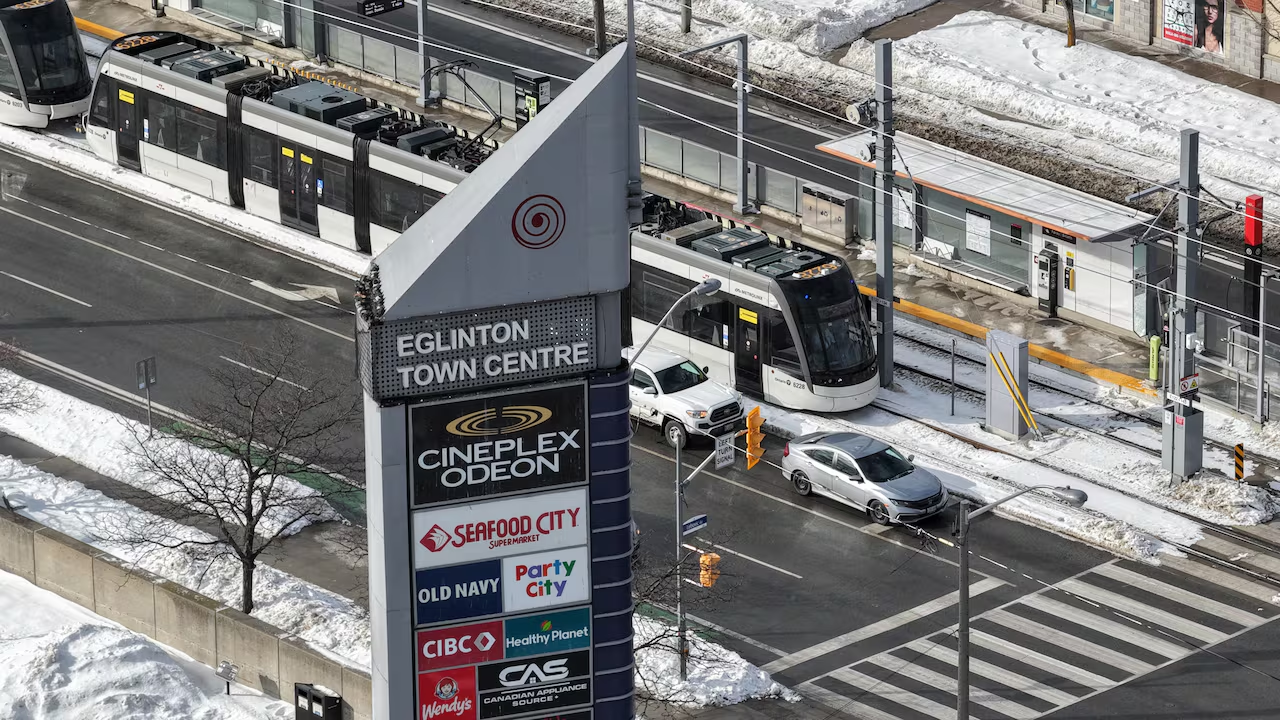
Remember what I said earlier about the raison d’etre of Metrolinx? Well, there's another, more cynical reason they exist—so the Ontario government can direct the development of transit projects while having a convenient shield that distances the elected politicians from problems on the projects they oversee.
The Government of Ontario directly runs Metrolinx. They pretend they don't, but they do. The board of directors are all appointed directly by the Minister of Transportation with no outside influence from anyone else, including the governments of the municipalities that Metrolinx directly impacts. Any supposed separation is merely semantic.
The real reason Metrolinx let Crosslinx have such a long leash was that they wanted, as much as possible, to not appear to the public like they were responsible for any delays. Of course, it's this attitude which ended up creating delays in the first place.
In 2022, a public inquiry was released on Ottawa's LRT project, the O-Train, which went through a similar construction hell. This report was extremely humiliating for everyone involved. While this wasn't a Metrolinx project, they seemed to be watching the public inquiry closely—not to avoid similar construction problems, but to avoid similar public embarrassment.
Metrolinx went completely silent on any possible opening date updates, which (according to leaked documents) was at the direction of the province, presumably because the electorate is more sensitive to blown deadlines than no deadlines. The median voter doesn’t really understand how long building an LRT should take—but they do understand “six years late and five billion dollars over budget”. The best solution, if all you care about is your reputation, is to leave the public in the dark and hope they just get used to absurdly long build times on projects being built in their streets with their tax money.
This is still happening, by the way. Almost none of Metrolinx's currently under construction projects have public opening dates. They're building new LRTs in Mississauga and Hamilton right now and the public has no idea when they might be done. We only got an opening date for the Eglinton Line five days before it happened.
And, wouldn't you know it, despite the province initiating the review into the O-Train, Premier Ford now seems to think a public inquiry into the Eglinton fiasco is unnecessary. We may never know the full story of what the hell happened here because Ford wants to avoid accountability when it's his government being held accountable.
As long as the main priority of Metrolinx is to shield Doug Ford from embarrassment, we're not going to build transit like we need to in Ontario.
❦
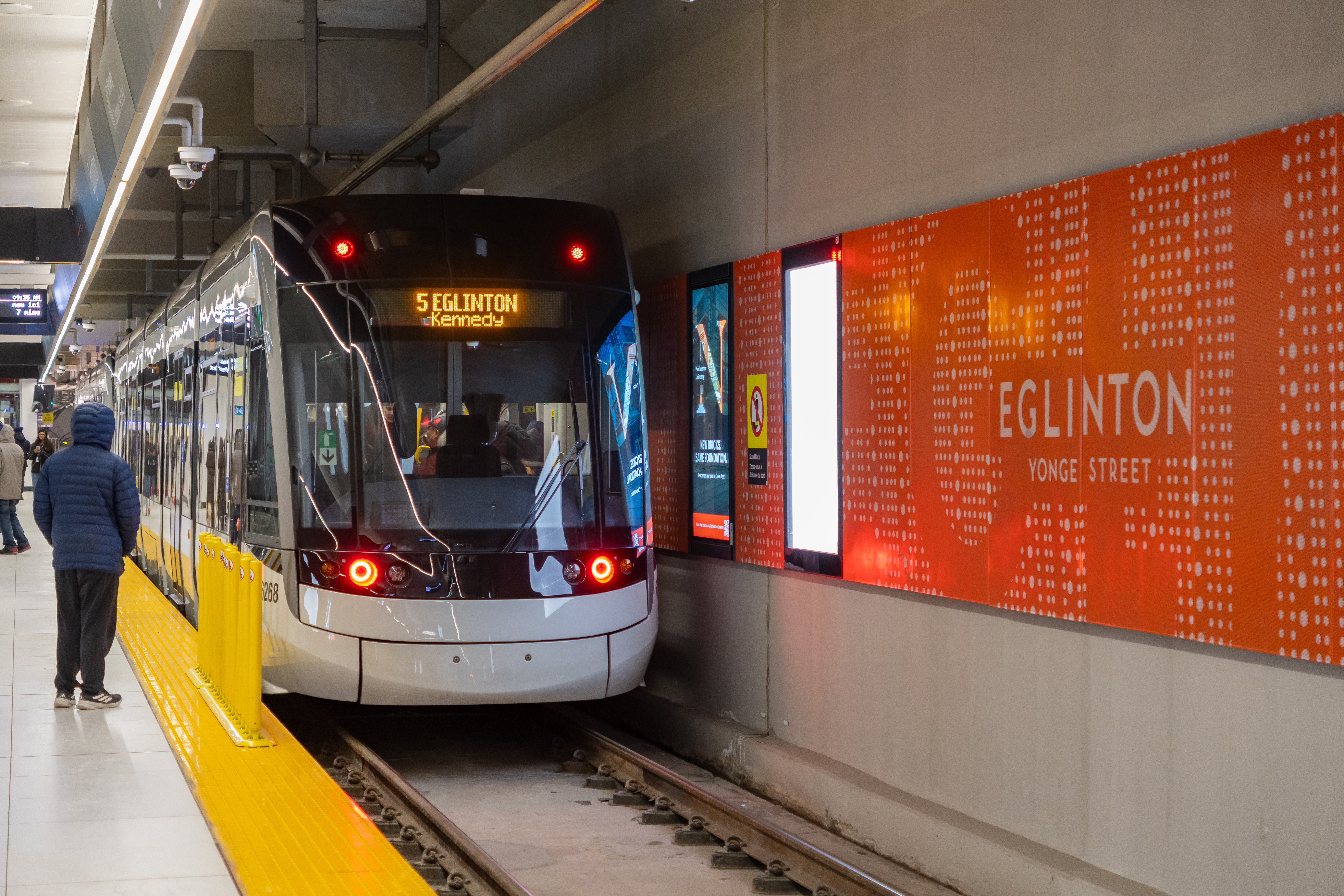
I think people have a bad habit of treating the Eglinton LRT more like a metaphor than a real construction project.
It’s a rich metaphor, to be sure. A swath was cut through earth directly through one of the busiest arteries in the busiest city in the country, leaving a wound on the psyche of Torontonians that would be very slow to heal.
It’s a flexible metaphor, too. You could use it as a representation of any number of issues, big or small. Is it a representation of Canada’s urban decline? Does it represent our inability to build the things we need in our society? Is it a symbol of the dangers of neoliberal privatization, or is it yet another big government boondoggle that spiralled out of control?
I want to push back on this a little. The Eglinton LRT is a lot of things, but we shouldn’t treat it as an inevitable consequence of some kind of moral failing or deficiency in modern Canadian society. This project was a real construction project which fell apart for specific, knowable reasons, which have been deliberately obscured by the province for the sake of reputational protection.
What I fear most is that people will simply think that this is just how big construction projects work in Canada. They’ll see big, ambitious projects being developed elsewhere around the world, and just assume it can’t work here because of some issue with the nature of the Canadian spirit.
Many powerful people in this country would love it if you believed this, because it means you would demand less of them. I urge you to demand more.
There is no reason why we should settle for anything less than the best. Toronto is one of the great cities of the world, and there’s no reason why it shouldn’t be considered among the most pleasant, rideable cities in the world too. But it’ll never happen if the power brokers of our society think they can get away with mediocrity, secrecy, and ripping you off.
I think the first step is to understand, in detail, what exactly happened here, and to demand enough transparency from Metrolinx and the province that the public can spot when a project is going off the rails for the same petty, personal reasons as the Eglinton LRT.
We can’t afford to let things like this keep happening. There’s just too much left to do.
Recommended posts
Get new posts delivered to your inbox via Substack.
Prefer RSS? Subscribe via RSS feed.